

As organisations continue to navigate digital transformation, the way they manage services internally is evolving rapidly. What started as IT Service Management (ITSM) is increasingly expanding across the entire organisation. Welcome to the era of Enterprise Service Management (ESM).
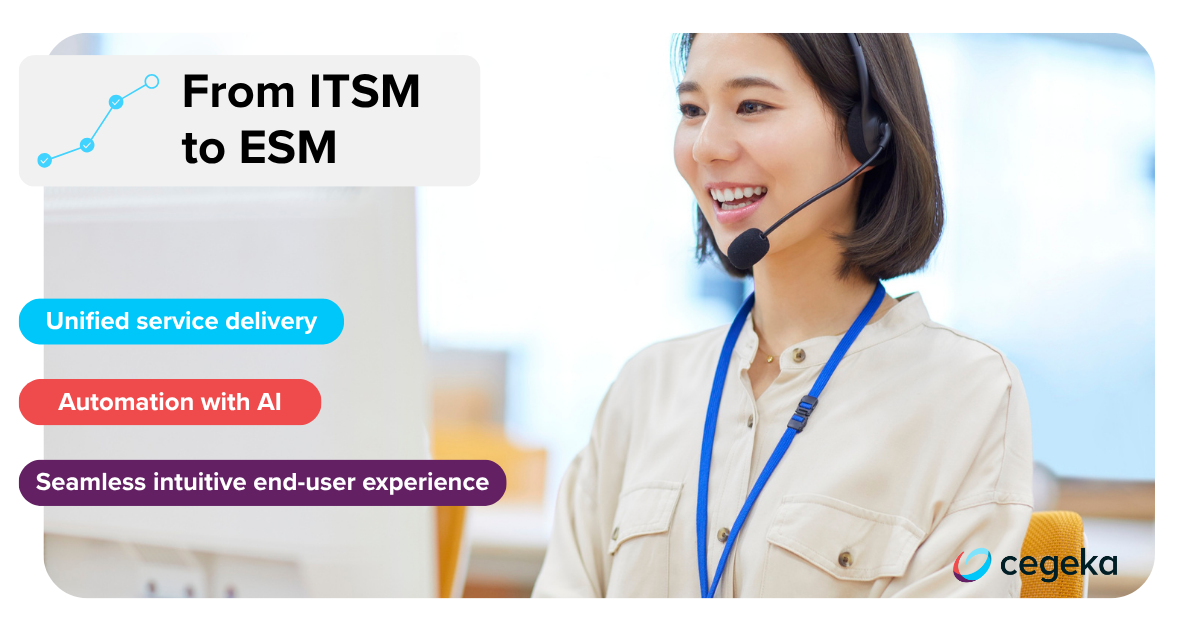
Where ITSM focuses on managing and delivering IT services, ESM extends these principles to other departments such as HR, Facilities, and Finance. The goal is a more integrated, efficient, and user-friendly experience for employees — one that mirrors the digital convenience they expect in their personal lives.
This shift is not just about technology; it’s about mindset. It requires departments to think in terms of service delivery and adopt a common platform and language. That’s where modern tooling and integration come in. Microsoft’s service ecosystem — including tools like Azure, Intune, and Microsoft Defender — offers native integration and scalability, which are key to driving this evolution. When configured and used strategically, they empower organisations to streamline service delivery, reduce complexity, and improve governance.
But there’s another layer that makes ESM truly future-proof: AI. With AI, organisations can offer predictive support, automate routine tasks, and deliver hyper-personalised experiences. Think of chatbots that not only answer questions, but proactively resolve issues. Or smart workflows that learn from behaviour and adapt over time. AI doesn’t replace people — it frees them up for more valuable work by taking over repetitive, rule-based tasks.
Still, technology alone isn’t the answer. Successful ESM initiatives require a thoughtful approach to change management, collaboration between departments, and a clear focus on the end-user experience. Self-service is a great example: it only works when information is structured, accessible, and relevant. Without that foundation, AI and automation can’t reach their full potential.
In short, the road from ITSM to ESM is a journey — one that brings together people, processes, and platforms. It’s about shaping a digital workplace that works for everyone, not just the IT department. And it starts with asking the right questions: where are the pain points, what do users expect, and how can technology help bridge that gap?